
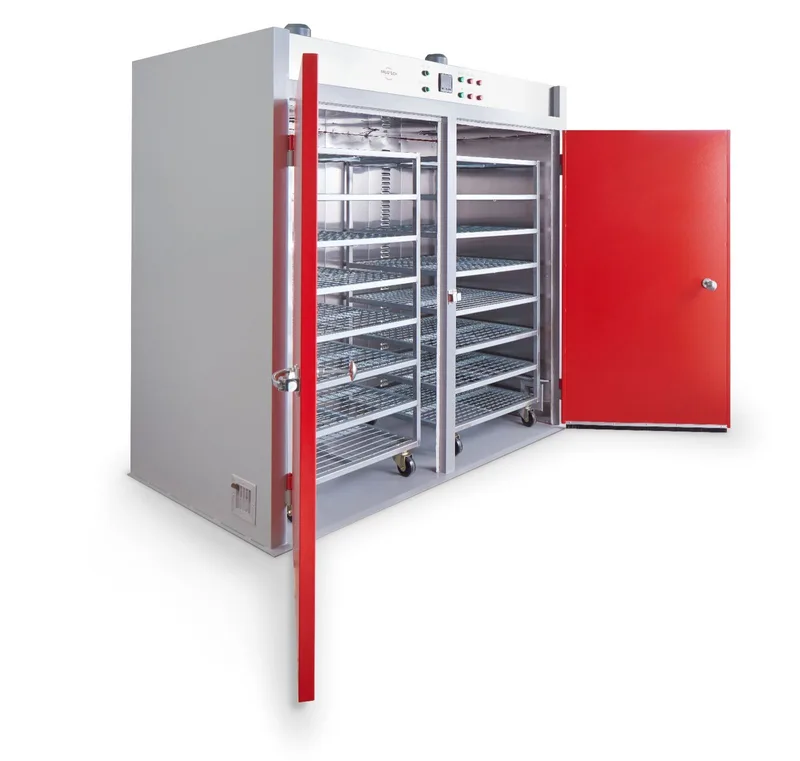
BDO Series Laboratory Drying Oven Forced-Air Sample Drying up to 150°C
High-efficiency infrared laboratory drying oven using direct radiant heat technology for rapid, uniform, and energy-saving sample drying in mining and industrial environments.
Key benefits of our Drying Oven BDO Series
Superior product quality, recovery and throughput
The patented REFLUX Classifier is one of our most advanced fine-particle, gravity-based separators, offering significant advantages in separation efficiency.
Cost-effectively boost productivity
Combining a conventional fluidised bed separator with a set of parallel inclined plates that form lamella channels increases unit capacity.
Low wear and maintenance
All components in our classifiers are designed to minimise wear and reduce maintenance. Units are manufactured to our high-quality standards.
Engineered for safety
Our classifiers are engineered to global safety standards and incorporates rated lifting points or to lift the entire unit.
Compact footprint design
Space-efficient design that fits into almost any plant layout while reducing the required plant footprint significantly.
Environmentally sustainable
Energy-efficient operation with reduced water consumption and minimal environmental impact for sustainable processing.
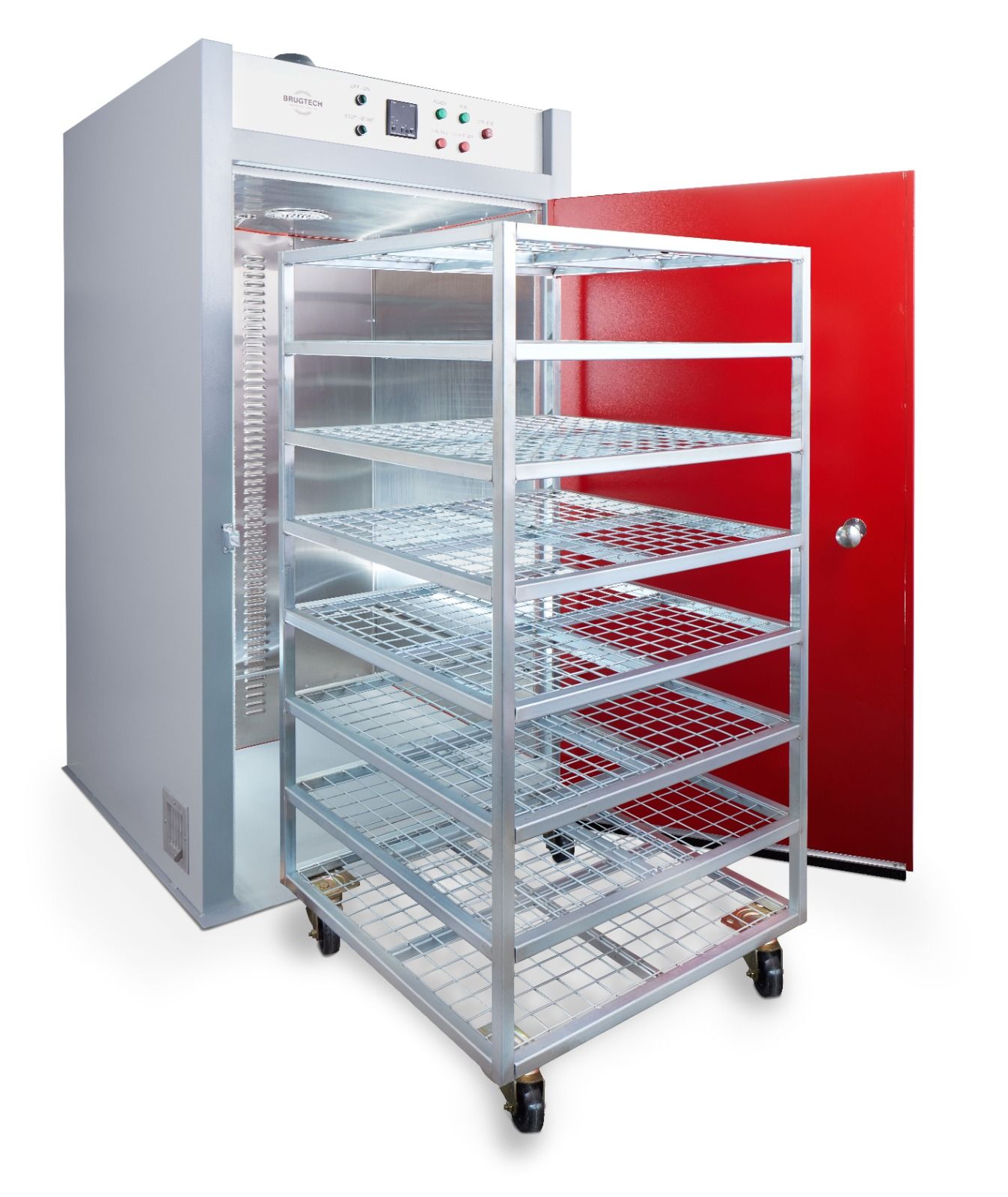
BDO1 - One Trolley Drying Oven
Technical configuration
The BDO1 is designed as a single-trolley drying oven, optimized for laboratories requiring reliable and controlled drying at moderate sample throughput. The oven chamber accommodates one mobile trolley fitted with multiple drying trays, enabling efficient batch processing while maintaining a compact overall footprint.
The system is equipped with an electric resistance heating system that provides accurate and stable temperature control across the operating range. Integrated temperature sensors and digital controllers ensure precise regulation, minimizing temperature fluctuations and protecting samples from thermal degradation.
An optimized internal airflow design, incorporating forced-air circulation, ensures uniform heat distribution throughout the chamber. This compact airflow path is specifically engineered to deliver consistent drying conditions across all tray levels, eliminating cold spots and ensuring reproducible moisture removal for each batch.
Typical technical use
The BDO1 is commonly used for laboratory-scale drying of crushed ore, mineral pulps, flotation concentrates, and similar mining and geochemical samples. Its controlled drying environment supports the preparation of samples for downstream analytical techniques by producing dry, stable, and homogeneous materials.
Due to its consistent temperature control and uniform airflow, the BDO1 delivers repeatable and reliable drying performance, making it well suited for routine analytical sample preparation in mining, metallurgical, and geochemical laboratories.
Operating Principle
Samples arranged on drying trays are loaded onto one or more mobile trolleys, which are then positioned inside the oven chamber. Once the chamber door is secured, the drying process is initiated by heating and circulating air through a forced-convection system. This system ensures uniform temperature distribution across all tray levels and minimizes thermal gradients within the chamber, thereby promoting consistent and reproducible drying conditions for all samples.
In electrically heated drying ovens, thermal energy is generated by electric resistance heating elements located within the air plenum or heating compartment. These elements convert electrical energy directly into heat, which is transferred to the circulating air. The heated air is distributed throughout the chamber by high-capacity circulation fans, allowing precise temperature control and rapid response to setpoint adjustments. Electric heating systems offer high temperature stability and are well suited for laboratories requiring accurate control and clean, emission-free operation.
In gas- or diesel-heated drying ovens, thermal energy is produced by a combustion system, typically comprising a burner and heat exchanger. The burner generates heat by combusting natural gas, LPG, or diesel fuel, while the heat exchanger transfers this thermal energy to the circulating air without allowing combustion gases to enter the drying chamber. This indirect heating method ensures sample integrity and laboratory safety while enabling high heating capacity and energy efficiency, particularly for large-volume or remote installations where electrical power may be limited.
Regardless of the heating method, moisture removal is achieved through continuous air exchange. As heated air passes over the samples, water is evaporated and carried away by the airflow. Moist air is vented from the chamber and replaced with fresh air, maintaining an effective drying environment while preventing condensation, localized overheating, or reabsorption of moisture.
This controlled combination of heat generation, forced air circulation, and regulated exhaust ensures efficient moisture removal, uniform drying, and protection of sample quality across a wide range of operating conditions.
Technical Performance
Temperature Control
- Operating temperature range typically ambient to 150 °C
- Operating temperature between 60–105 °C and max temp 150 °C
- Electric, gas, or diesel heating systems depending on model
- High-accuracy temperature sensors (PT100 or thermocouple)
- Digital PID temperature controller for stable setpoint control
- Secondary manual over-temperature protection with additional thermocouple for safe operation
Airflow and Heat Distribution
- Forced-air circulation using heavy-duty industrial fans
- Optimized air ducting for even airflow across all trays
- Consistent heat transfer for uniform drying of fine and coarse samples
- Designed to prevent cold spots and uneven moisture removal
Control and Safety Systems
- Digital control panel with temperature display and setpoint adjustment
- Independent safety thermostat
- Automatic shutdown in case of fan or heating failure
- Insulated chamber walls to minimize heat loss and improve energy efficiency
Applications for our Drying Oven BDO Series
Discover how our Drying Oven BDO Series can be used in various industries and applications.
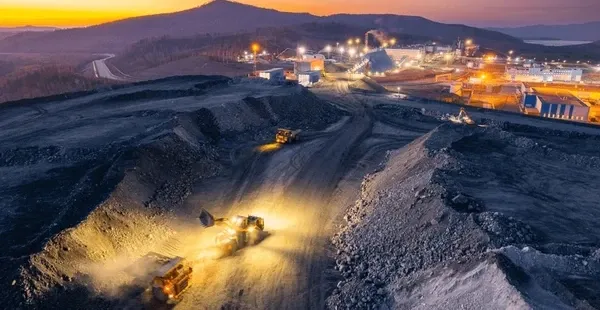
Mining & Exploration
Reliable solutions for mining and exploration operations in challenging environments

Remote & Harsh Environments
Designed to perform in extreme conditions and remote locations
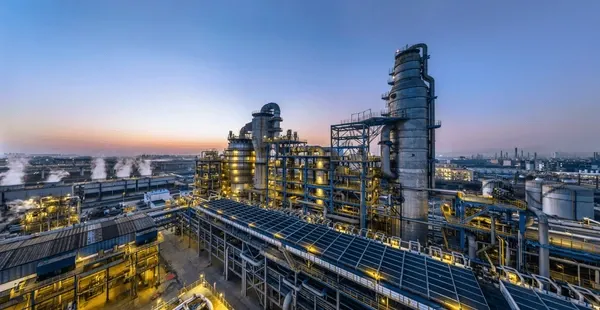
Industrial Projects
Comprehensive solutions for large-scale industrial projects and operations
BDO2 Operation Video
This video demonstrates how to operate our BDO2 Series Drying Oven, designed to fit 2 trolleys for increased production output. It highlights all key operating and safety features, including the safety door handle, temperature controls, and proper oven operation to ensure safe and efficient use.
BDO9 Operation Video
This video demonstrates how to operate our BDO9 Series Drying Oven, designed to fit 9 trolleys for increased production output. It highlights all key operating and safety features, including the safety door handle, temperature controls, and proper oven operation to ensure safe and efficient use.
Spare parts for our Drying Oven BDO Series
Explore the spare parts available for the Drying Oven BDO Series to ensure optimal performance and longevity.
Downloads for Drying Oven BDO Series
Here you can find all relevant documents for our Drying Oven BDO Series.
Frequently asked questions
FAQs for the Drying Oven BDO Series
What is sample drying?
Sample drying refers to the controlled removal of moisture from a sample and is a fundamental step in many sample preparation workflows. By eliminating water or other solvents, drying helps stabilize the sample, prevent degradation or interference, and ensure consistency and accuracy in subsequent analytical techniques. In many analytical procedures, proper sample drying is essential for obtaining reliable and reproducible results.